The awarding of the Third-Class Labor Medal to Venerable Thích Nhật Từ, abbot of Giác Ngộ Pagoda in Ho Chi Minh City, at the 10th National Buddhist Congress on November 7, 2026, is sparking a wave of heated debate on Vietnamese social media.
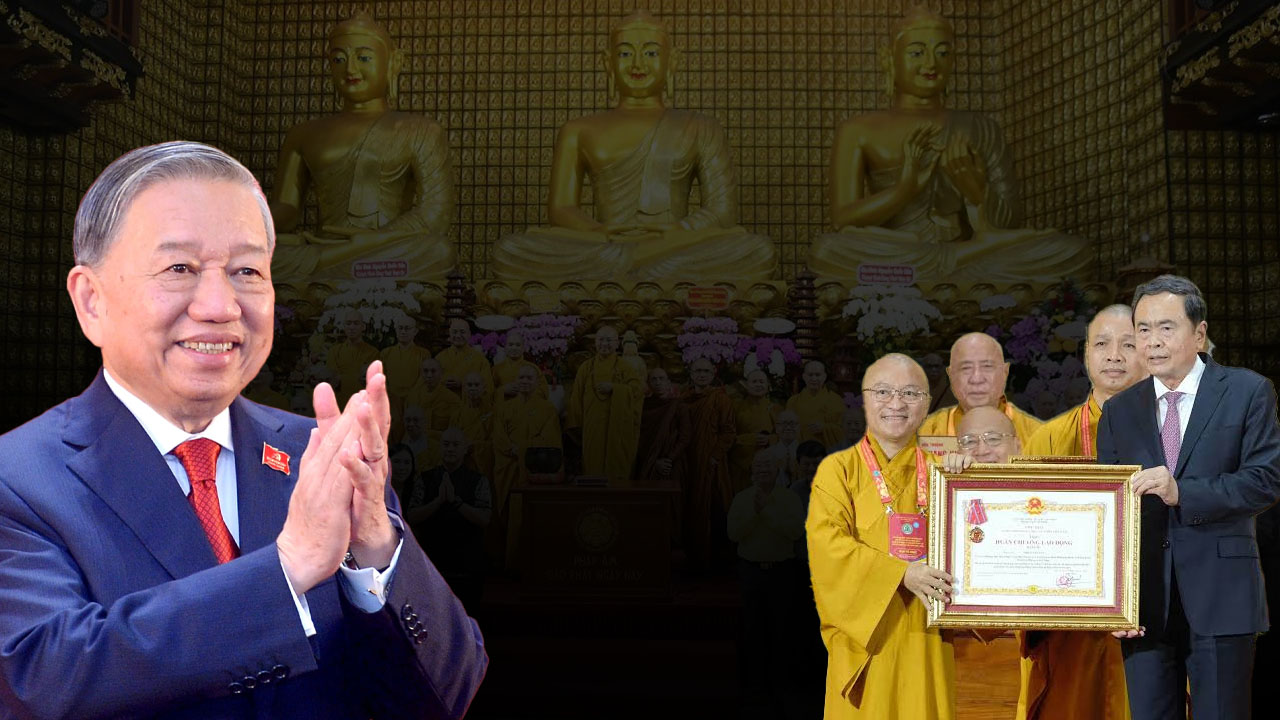
According to a statement from state media, this prestigious national award was presented to recognize Venerable Tu’s achievements and contributions to the nation’s construction and development, as well as his service to society.
Notably, shortly thereafter, Thich Nhat Tu’s posting of an invitation for Buddhists to attend a ceremony commemorating the 42nd anniversary of his ordination—combined with the acceptance of the aforementioned medal—on November 14, 2026, drew significant attention and sparked a flood of scathing, satirical comments.
Many social media users and observers of religious life largely agree that the greatest paradox lies in the awarding of a medal to a person who has taken monastic vows.
Quite a few expressed astonishment that a Buddhist monk—who lives off the offerings of devotees and does not directly participate in the production of material wealth—would be honored with an award for labor achievements.
Many candid comments have questioned the contradiction between Buddhist teachings—which instruct people on impermanence, selflessness, and the renunciation of worldly fame—and the lavish, ostentatious events organized by Venerable Thich Nhat Tu.
Meanwhile, for a large segment of Buddhists, the line between serving the Dharma and seeking recognition from the secular political power structure is becoming more objectionable than ever.
According to experts, the strong reaction from the online community to this Third-Class Labor Medal is not merely a fleeting phenomenon, but rather the culmination of prolonged controversies surrounding Venerable Thích Nhật Từ—the abbot of Giác Ngộ Temple—over the past period.
Previously, in May 2025, the Executive Council of the Vietnam Buddhist Sangha’s appointment of Thích Nhật Từ as Deputy Chief of the Central Office also sparked a fierce wave of online backlash.
The root of this discontent stems from the fact that Thich Nhat Tu had previously sent a written petition to Sri Lankan authorities requesting they block the alms-seeking pilgrimage of monk Thich Minh Tu.
According to the petition, Mr. Tu accused the pilgrimage group of attempting to establish a dissident sect, gathering individuals with questionable backgrounds to sow social division and damage the reputation of the Vietnam Buddhist Sangha. This severely tarnished his image in the eyes of devout Buddhists.
According to religious sociologists, this incident reveals a thought-provoking reality about the dynamic relationship between mainstream religious institutions and the state apparatus in Vietnam today. Such recognition is often viewed by the political system as evidence of a united front and harmony between religion and secular life.
However, in the eyes of a significant segment of Buddhists and believers, this inadvertently diminishes the sanctity and purity of spiritual life.
Harsh critiques from some writers and social observers on their personal pages—though subjective and emotionally charged—also partly reflect the public’s crisis of confidence in the conduct of certain influential religious figures in the media.
The debate surrounding Venerable Thích Nhật Từ’s Labor Medal has raised a major question about the true measure of a monk’s worth in a totalitarian society: when the people’s trust and respect are built on certificates of merit and administrative titles, rather than on humility, virtue, and the spirit of compassion that are true to the essence of Buddhism?
Trà My – Thoibao.de
=======
What Can We Learn from the Case of Venerable Thích Nhật Từ Being Awarded the Third-Class Labor Medal?
“…Venerable Thích Nhật Từ’s award of the Third-Class Labor Medal has sparked much debate regarding such honors for religious figures.”
#Vietnam #ChinhTruongVN #Thoibao