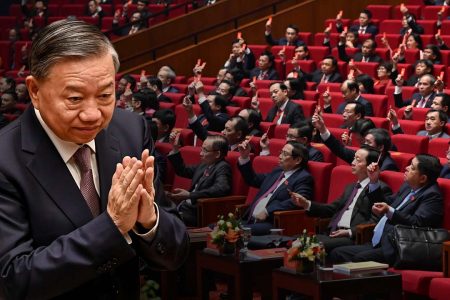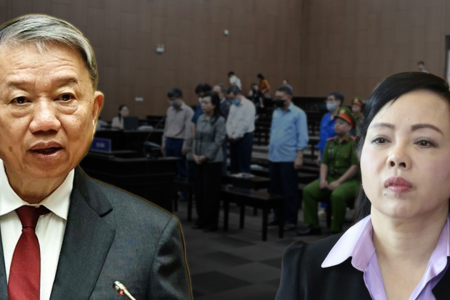
On August 24, 2026, the Vietnamese National Assembly issued a directive to “ensure that 100% of cases identified as showing signs of criminal activity are prosecuted for investigation in accordance with the law.” This is drawing particular attention from the public.

This move comes at a time when public opinion is engaged in a heated debate over the traffic accident involving Mr. Nguyen Sy Cuong. The case has become even more “sensitive” given that Mr. Cuong is a former National Assembly deputy.
Notably, following a news segment on VTV—which featured a series of analyses by legal experts on the transparency of the case’s resolution—the issue has once again reached a boiling point.
According to experts, it must be made clear that the National Assembly’s decision, as mentioned above, cannot be interpreted as a provision with immediate retroactive effect.
This is because criminal law always adheres to the principle of temporal applicability; therefore, a new resolution by the National Assembly cannot retroactively classify a past act as a crime in a manner that is detrimental to the suspect.
However, the case of Mr. Nguyen Sy Cuong raises a different legal issue. If the case was previously determined by prosecutorial authorities to show signs of a criminal offense but was subsequently handled in an “ambiguous” manner to exempt the suspect from criminal liability, is that an unlawful decision?
This is a crucial point that must be clearly distinguished from the concept of “retroactivity.” If the previous handling of the case was accurate, the competent authorities have no reason to change their decision simply due to public pressure.
Conversely, if there is evidence showing that the previous legal proceedings contained errors, intentionally omitted important details, or applied provisions inaccurately, then a review is legally required under current law—not simply because a new regulation has been issued.
According to experts, it is precisely in this regard that the accident involving Mr. Nguyen Sy Cuong is becoming a test of accountability for the entire judicial system.
However, the coincidence between the timing of the National Assembly’s issuance of the new resolution and the ongoing controversy does not mean that this document was written specifically for one individual.
Nevertheless, this coincidence has led the public to ask: Prosecutorial agencies must provide a clear explanation to the National Assembly and the public, and this is absolutely essential.
Society needs to know exactly how Mr. Cuong’s actions were determined, which provisions were applied, why he met the conditions for exemption from criminal liability, as well as the extent to which mitigating circumstances or the victim’s family’s opinions hold legal weight.
As long as this lack of transparency persists, it will quickly be filled with speculation and rumors.
Conversely, a comprehensive and convincing explanation from the competent authorities would provide a satisfactory answer based on the principle of holding the right person accountable for the right crime, while also ensuring that the innocent are not wrongfully accused.
If the review process uncovers misconduct, correcting those errors is also a necessary step to demonstrate the system’s integrity.
A progressive judicial system is not one that is perfect and never makes mistakes, but rather one that has sufficient mechanisms to detect, disclose, and correct errors.
In short, what the public expects following the National Assembly’s Resolution is not merely whether Mr. Nguyen Sy Cuong will be indicted or not.
The bigger question lies in how law enforcement agencies will demonstrate that the principle “100% of cases showing signs of criminal activity must be prosecuted” is applied consistently, regardless of the suspect’s status.
However, it would be more persuasive if the National Assembly requested a full report on the case file to address public concerns and treated this as a test case for implementing the new resolution.
Tra My – Thoibao.de