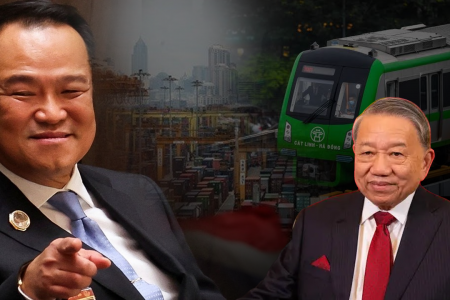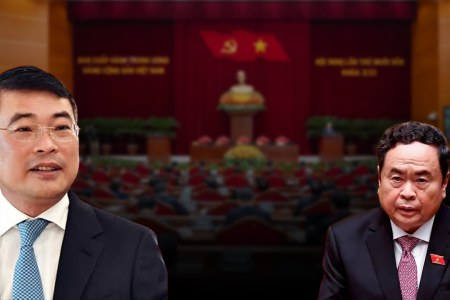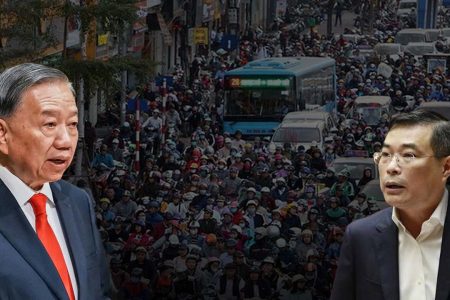
The statement that “All guidelines and policies must stem from the aspirations, legitimate interests, and happiness of the people” is frequently emphasized by General Secretary and President To Lam and regarded as a guiding principle in the New Era.
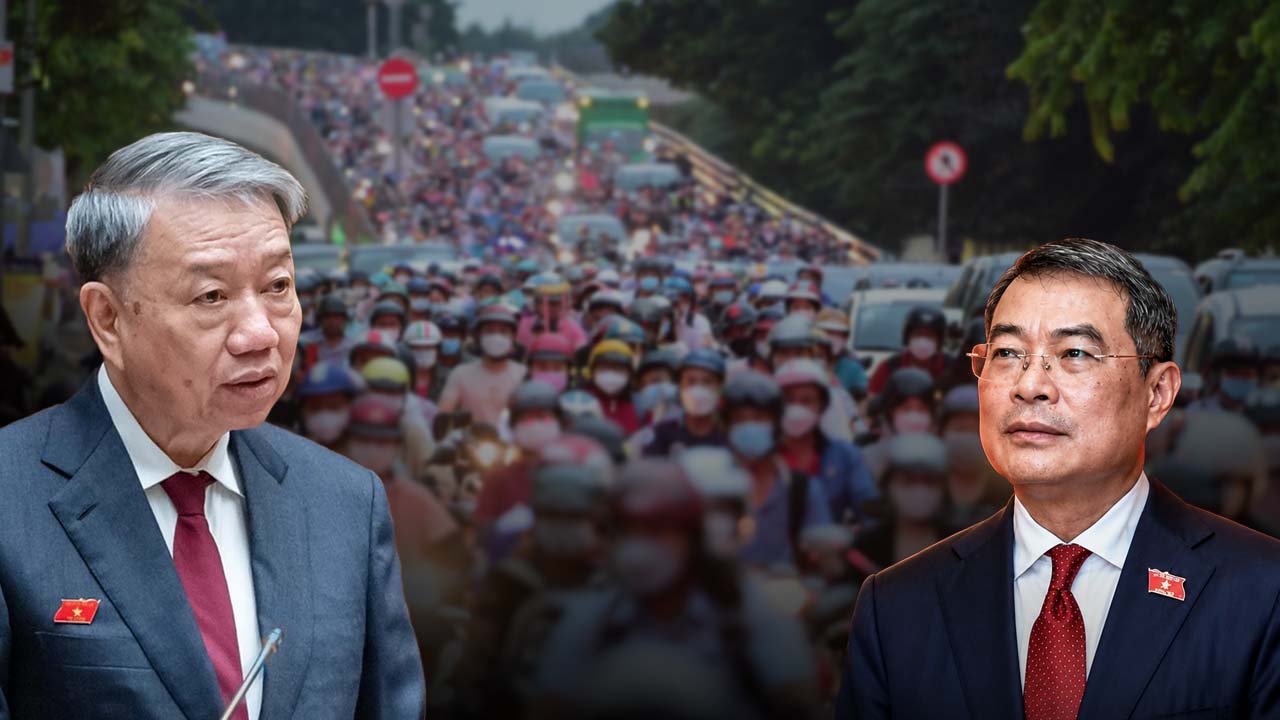
However, the gap between these directional political slogans and their actual implementation is revealing deeply troubling gaps.
Recent administrative regulations have raised public questions about how closely the administrative apparatus is attuned to real-life conditions at this time.
On August 27, 2026, at a session of the Standing Committee of the National Assembly, a representative from the Vietnam Chamber of Commerce and Industry raised a question that cut to the heart of the matter: “How can a pho shop prove where the chickens they buy come from and provide invoices and receipts?”
At first glance, the question seems simple, but behind it lies an extremely pressing reality weighing heavily on the shoulders of millions of small business owners across the country.
When strict requirements are imposed on every small, individual purchase, business owners face significant obstacles. They find themselves in a situation where it is nearly impossible to comply with the law—a highly bureaucratic approach to governing the people.
When regulations exceed what is practically feasible, people are forced to find ways to cope—either by “legalizing” their paperwork or by simply ceasing to do business.
Similarly, at a time when Vietnam’s road infrastructure remains inadequate and inconsistent, the Ministry of Public Security’s enforcement of a minimum distance requirement between vehicles on expressways poses a major challenge to development efficiency.
If drivers are forced to constantly monitor signs mandating a 55-meter distance while on the move, traffic congestion will become even worse than on ordinary national or provincial highways.
Furthermore, the negative consequences for daily life and the economy will become immediately apparent. The frequency of traffic police patrols on expressways—conducted to enforce this rule—will skyrocket, as up to 90% of drivers could be cited for this spacing violation.
To protect their wallets, drivers will be forced to avoid the expressways and revert to the old national highways for safety. The result will be longer travel times, further congestion on already narrow roads, and immeasurable economic losses stemming from a revenue-driven management mindset.
During his lifetime, the late Da Nang City Party Secretary Nguyen Ba Thanh once bluntly pointed out: “The more bureaucratic we become, the further we drift from the people, and that is precisely the evil of those in power,” and this is a “disease of officials who oppress and exploit the people,” the inevitable outcome of which is social resistance.
As a member of the Party Central Committee and Head of the Central Internal Affairs Commission, Mr. Thanh deeply understood the nature of power, and the abuse of power described above is an “inevitable law” when interest groups seek to manipulate state policy for their own gain.
Mr. Thanh’s warning also outlines a predictable path to collapse: if the regime distances itself from the people and oppresses them, it will lead to resistance and ultimately the regime’s downfall.
This concern is further reinforced by remarks made by former Standing Member of the Party Secretariat Tran Quoc Vuong at the 2019 National Conference on Party Building.
Mr. Vuong emphasized that, “Whether the foundation we have built over the past 75 years collapses or not depends entirely on us. No one is invading us; no one is bringing in planes or artillery to invade or overthrow us. If we don’t do our job well, we will bring about our own downfall.”
In short, policies that create difficulties for pho vendors or regulations on distance on highways are not merely technical errors. They are manifestations of the disease of bureaucracy and detachment from the people.
The “new era” will be nothing but empty promises if Mr. To Lam and the leadership continue to issue regulations that place a burden on society as they do today.
Trà My – Thoibao.de