For many years, remittances have been seen as a quiet “lifeline” for Vietnam’s economy. Billions of dollars from Vietnamese living abroad flow back steadily, helping to support families, fund businesses, and provide a significant source of foreign currency for the country. However, if that flow of money is truly slowing down, this is not just a number on a report. It could be a signal that gives many people pause for thought.
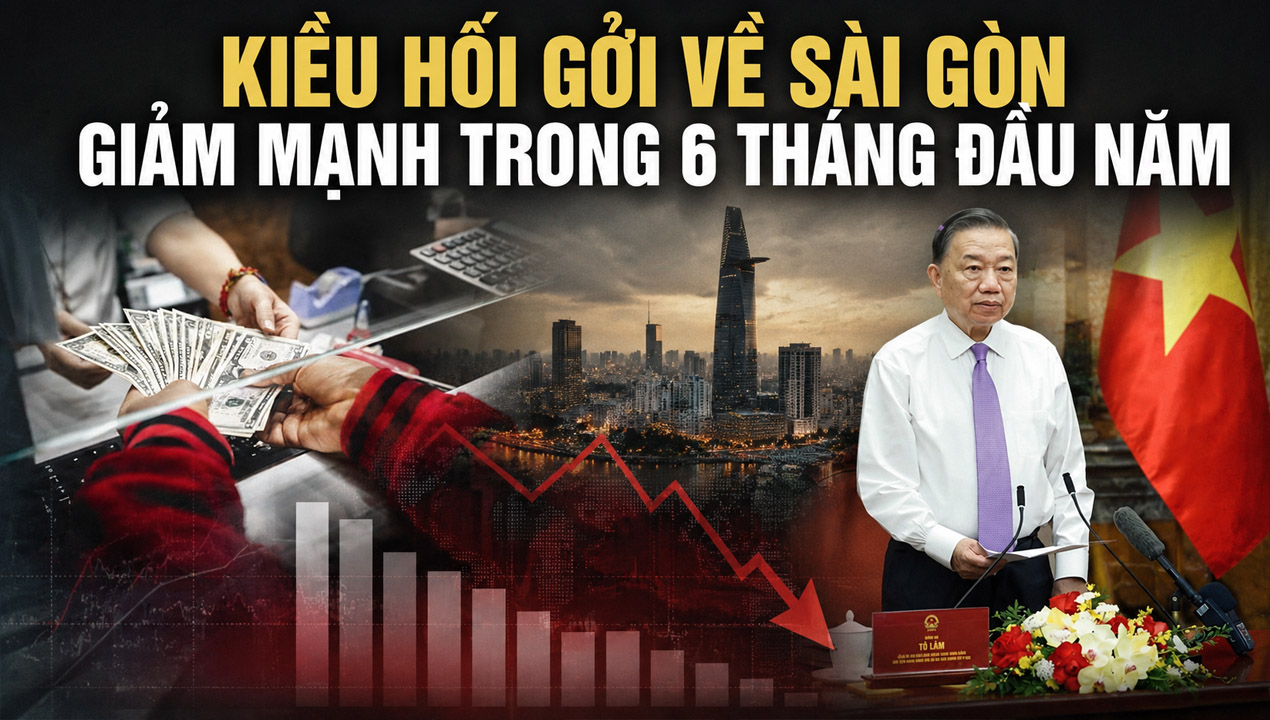
After all, remittances don’t come out of thin air. Behind every U.S. dollar sent home lies the sweat and tears of Vietnamese people living and working abroad. They send money home because they still have families, a homeland, and faith. So if one day that flow of money were to drop sharply, the question we must ask is: Is it because of global economic difficulties, or because those sending money no longer see the need to send it home?
The government may present a series of impressive growth figures, but the trust of the people—especially those living abroad—cannot be measured by statistics alone. If remittances were once a steady stream flowing into Saigon, then a stream that is beginning to dry up is certainly worth taking a closer look at. Because behind the money that is no longer being sent home, there may be more than just economic hardship—there may be a bigger question: What is causing Vietnamese people living abroad to be increasingly reluctant to send their future back to their homeland?
https://www.facebook.com/share/v/18rP2bKmnE/